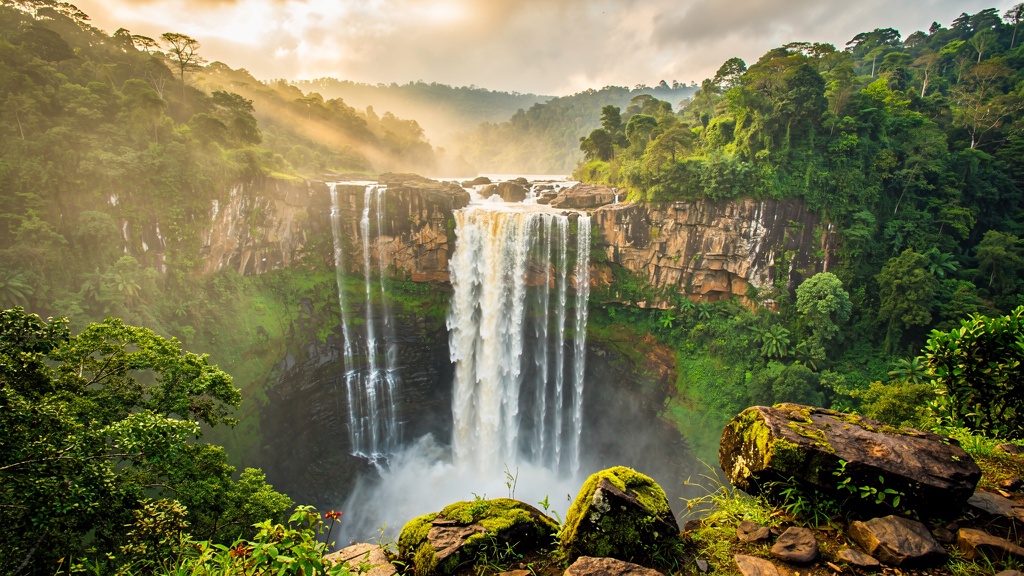
Barehipani Falls
The two-tiered marvel of Mayurbhanj, plunging in twin steps through Sal-covered cliffs. Access from Barehipani Nature Camp. The trail is well-marked but steep in places — carry water and good grip footwear.
2,750 km² of uncut Sal forest, twin sacred rivers, dramatic waterfalls, tigers, elephants — and a network of nature camps to dive into it responsibly.
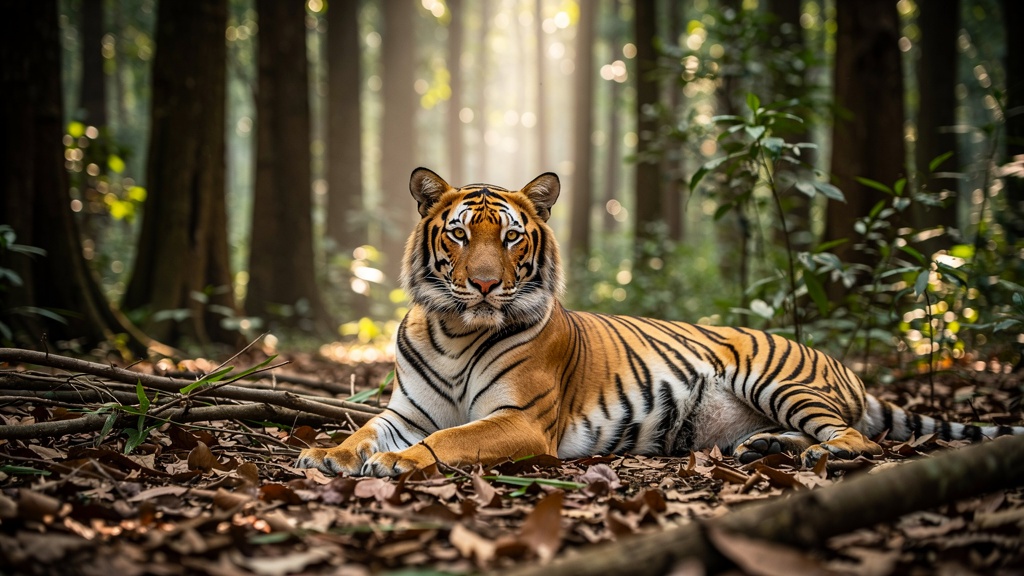
Declared a Tiger Reserve in 1973 and a UNESCO Biosphere Reserve in 2009, Similipal is dominated by Sal forests with patches of moist deciduous teak, bamboo and a stunning mosaic of rivers — the Manda, Deo, Budhabalanga, West Deo and Khairi wind through it. With elevations ranging between 300 m and 1,100 m, the terrain shifts from dense bamboo valleys to ridge-top meadows.
For travellers, the park splits into the easily accessible Upper Baripada range — home to Barehipani & Joranda waterfalls — and the more intense Chahala / Joranda core ranges which require registered jeep safaris.
The two-tiered marvel of Mayurbhanj, plunging in twin steps through Sal-covered cliffs. Access from Barehipani Nature Camp. The trail is well-marked but steep in places — carry water and good grip footwear.
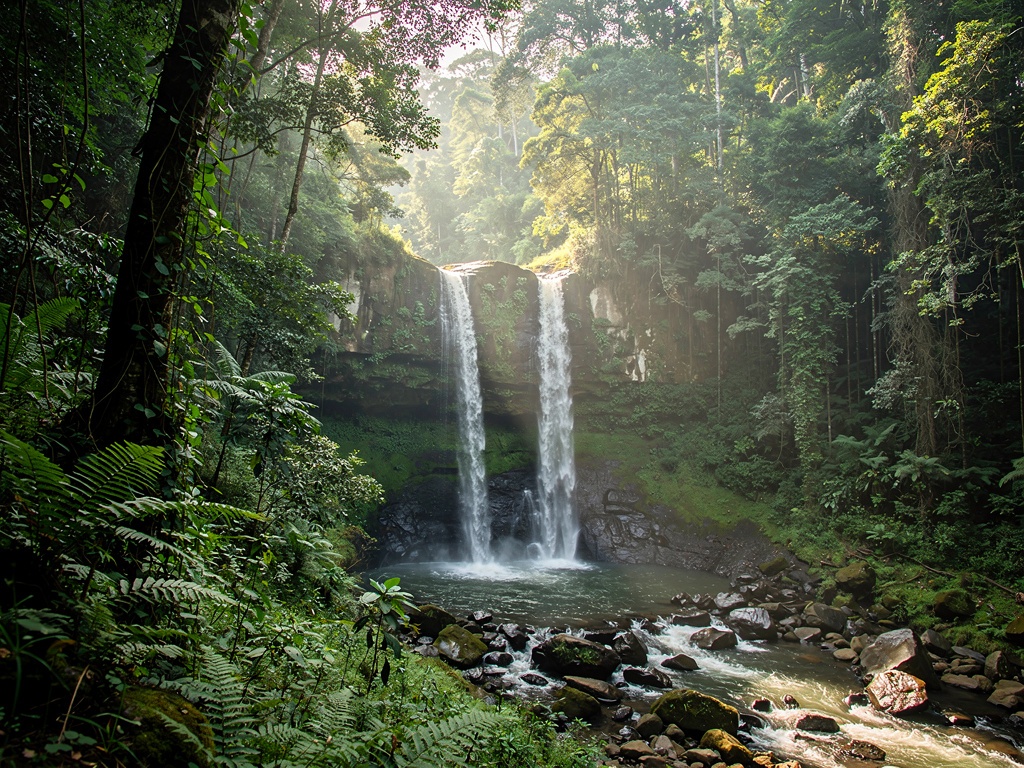
A single 150 m silver sheet that touches the rock face gently — the most photographed waterfall in Odisha. Approach via the Joranda forest check-post; bring rain coats between June and December if you want the spray without soaking.
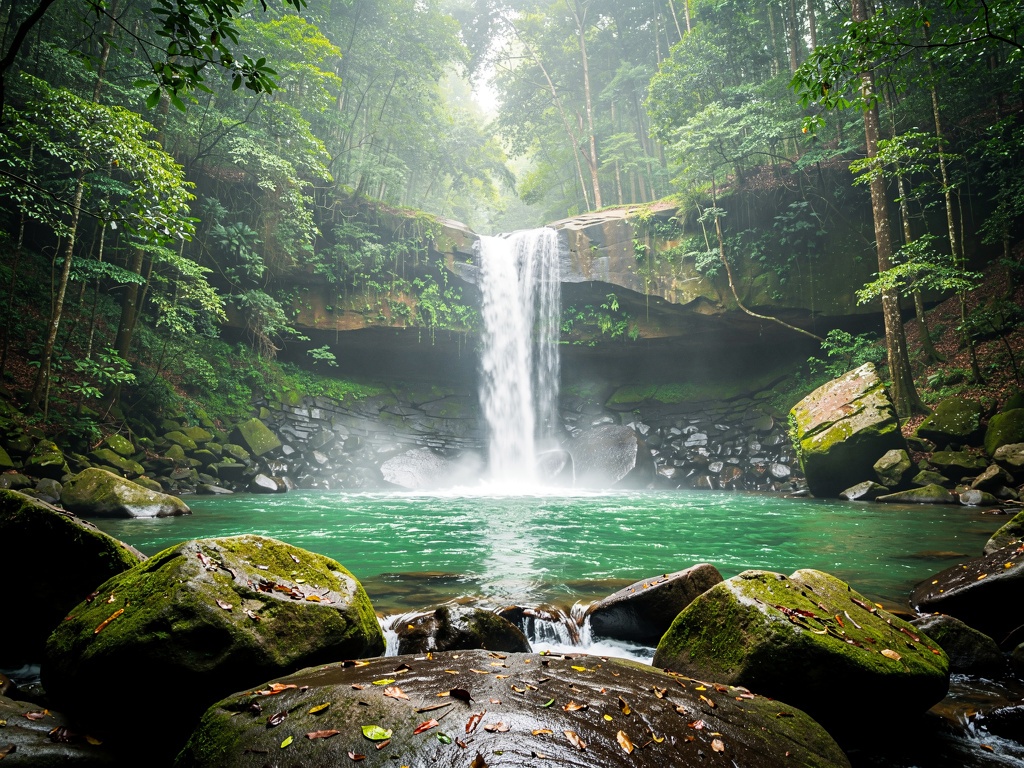
An offbeat plunge pool tucked deep into a moss-boulder gorge. Lower flow than Barehipani or Joranda but more intimate — often the highlight for repeat visitors. Ask your guide for the inner path during your camp stay.
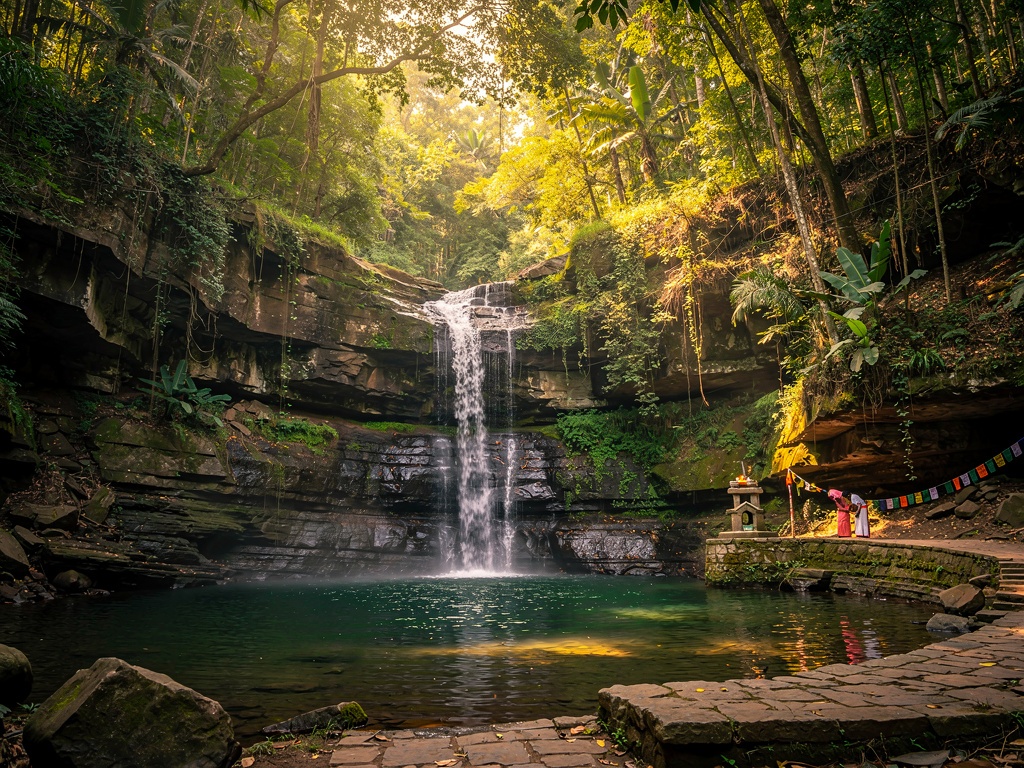
Linked in legend to Sita’s exile, this sacred plunge pool lies deeper into the park — access by jeep + short trek. While the swimming itself is restricted at times, the pool’s deep greens make for unforgettable images.
Three core ranges offer jeep safaris — each with a distinct feel and signature wildlife.
| Range | Signature experience | Best for | Access from |
|---|---|---|---|
| Chahala | Deep Sal forests, highest tiger density | Tiger sightings, elephant herds | Baripada via Pithabata (~75 km) |
| Joranda | Gateway to Barehipani & Joranda falls, riverine forest | Waterfall combos, bird watching | Pithabata / Baripada |
| Upper Baripada | Manda-Deo river valleys, easier terrain | First-time visitors, birding | Baripada (~25 km) |
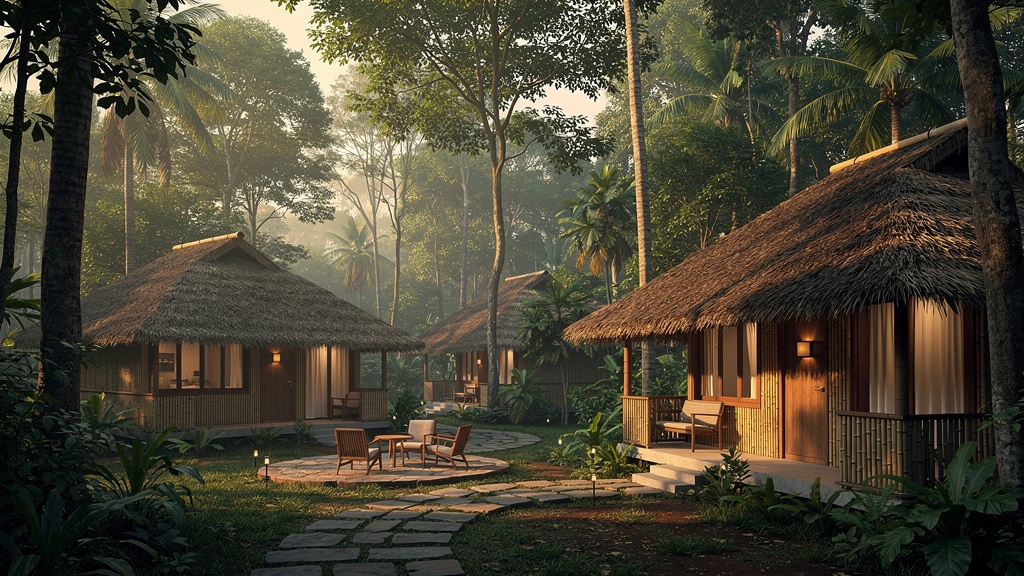
Forest-department-run nature camps at Barehipani, Jamuani and Chahala let you wake up inside the reserve. These are rustic, well-maintained and the only sanctioned way to stay within the boundaries.
| Item | Indicative (verify locally) | Notes |
|---|---|---|
| Park entry fee | ₹ 50–200 per head (Indian) | Vehicle fee separate; varies by entry gate. |
| Camera fee | ₹ 50–200 per camera | Different for still & video; some zones require clearance. |
| Jungle guide | ₹ 600–1000 per safari | Mandatory in core zones. |
| Jeep hire | ₹ 3000–4500 per safari (ex-Baripada) | Multi-day rates negotiable. |
| Nature camp cottage | ₹ 1500–3000 per night | Includes breakfast & dinner usually. |
The gate typically opens 1 November to mid-June; the post-monsoon October/early November and the cool December-January weeks are best. Wildlife sightings peak in March-April as animals concentrate near water.
Apply at the Pithabata or Jashipur forest office one day in advance, or try the official Similipal Tiger Reserve booking page where applicable. A registered guide is mandatory; the same jeep + guide can be hired on the spot (subject to availability).
Yes, with the usual jungle caveats. Follow the guide’s instructions, do not alight from the jeep outside designated spots, never feed animals, and keep voices low. The reserve is professionally managed; the camps have a guest-friendly atmosphere even for foreign travellers.
Mosquitoes: real concern between October and December. Carry a repellent and full-sleeve clothing. Connectivity: limited to absent inside the park — treat it as a detox, not a disadvantage. Weather: cool at night (10–14°C Dec/Jan), warm by April (32–38°C).